Elektrinio kontaktinio slėgio matuoklio naudojimo ir derinimo įgūdžiai
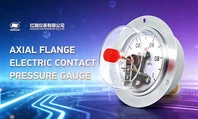
In today's practical applications, electrical contact pressure gauges are usually used together with corresponding electrical devices, such as relays and contactors. At present, electrical contact pressure gauges have been widely used in petroleum, chemical, metallurgy, power plants and other industrial sectors or in the matching of mechanical and electrical equipment to measure the pressure of various fluid media without explosion hazards. The instrument is mainly composed of a measuring system, an indicating device, an electrical contact assembly device, a casing, an adjustment device and a junction box.
When testing the performance of the electric contact pressure gauge, the assembled instrument is mainly installed on the pressure calibrator, and the matching digital display ohmmeter is connected to the junction box. Then carry out forward (boost) and reverse (depression) verification of the pressure indication of the pressure gauge respectively. Under normal circumstances, the indication error of the pressure gauge should meet the requirements of the verification regulations.
In fact, when calibrating the pressure indication value of the electric contact pressure gauge, we can also see the change of the variable resistance value from the digital ohmmeter. When observing, pay attention to the output of the resistance value before reading. The resistance change, like the pressure indication change, should be linear, and pay attention to its continuity. In the upper and lower limits of the pressure indication value, attention should be paid to whether the variable resistor is within the effective working range, otherwise it needs to be adjusted by changing the position of the contact piece.
In addition, when debugging the electrical contact pressure gauge, taking into account the functional requirements of the line, it is also necessary to check whether the electrical conductivity between the variable resistor moving contact piece and the winding resistor is good. At this time, the contact pressure between the moving contact piece and the winding resistor should be checked first, and then the contact pressure between the moving contact piece and the winding resistance should be checked.
It should be noted that in the testing process, the geometry and raw material properties of the variable resistor moving contact piece attached to the electrical contact pressure gauge should meet the requirements as much as possible, so as to facilitate adjustment.